 info@saintgloble.com
 (+91) 75758 08714
Waterproof SBR: Uses, Benefits and Applications in Construction
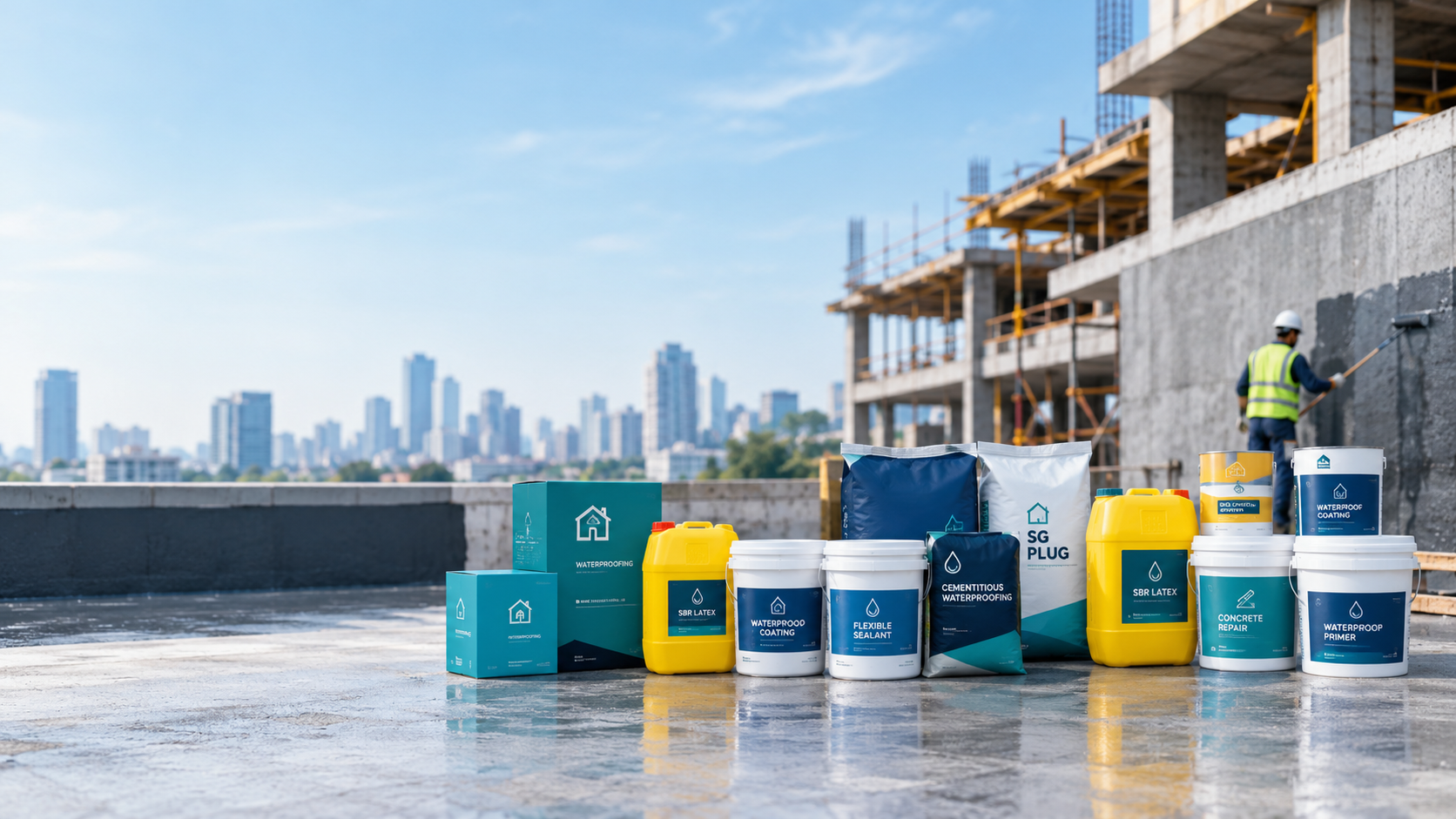
Waterproofing is an essential part of modern construction because moisture can affect concrete, plaster, masonry, and other building surfaces over time. Selecting suitable waterproofing materials helps protect structures from water penetration and supports the durability of construction work. One material commonly discussed in this context is SBR latex, a synthetic polymer that can improve the properties of certain cement-based mixes.
Waterproof SBR is a useful search term for builders, contractors, engineers, and homeowners looking to understand SBR-based materials and their applications in construction. Depending on the formulation, SBR latex may be used in cementitious waterproofing systems, concrete repair mortars, bonding applications, and surface preparation.
However, SBR latex is not the same as every waterproofing coating or membrane. Understanding its properties, appropriate applications, and limitations can help you select a solution that suits your project.
In this guide, we explore what SBR latex is, how it is used in construction, its benefits, and the factors to consider when choosing waterproofing materials.
What Is Waterproof SBR?
SBR stands for styrene-butadiene rubber, a synthetic polymer used in various construction formulations. SBR latex is a water-based polymer dispersion that can be added to compatible cement-based mixtures to improve selected performance characteristics.
Depending on the product formulation and intended use, SBR-modified cementitious materials may offer improved adhesion, flexibility, workability, and resistance to water penetration compared with an otherwise similar unmodified mixture.
SBR is often considered for concrete repairs, bonding slurries, and cementitious waterproofing applications. Its performance depends on the product's composition, mixing ratio, substrate condition, application method, and curing process.
It is important to distinguish an SBR additive from a complete waterproofing system. A polymer additive may improve a cement-based mixture, but it does not automatically make every surface waterproof. The product must be approved for the intended application and installed according to the manufacturer's technical instructions.
How Is SBR Latex Used in Construction?
SBR latex can serve different purposes in construction, depending on the formulation and the materials with which it is used.
1. Cement-Based Waterproofing Applications
Certain SBR-modified cementitious systems are used where resistance to water penetration is required. The polymer can modify the properties of the cement-based material, helping it adhere to suitable substrates and perform according to its intended design.
Applications may include selected concrete surfaces, cementitious coatings, and other areas specified by the product manufacturer.
For water tanks, terraces, bathrooms, basements, or other locations exposed to significant water pressure, choose a complete system specifically approved for those conditions rather than relying on SBR latex alone.
2. Concrete Repair
Concrete can develop cracks, surface deterioration, and damaged areas because of environmental exposure, movement, poor workmanship, or ageing.
SBR latex may be used in compatible repair mortars to improve adhesion and selected mechanical properties. This can be useful when repairing concrete surfaces, provided the damaged material is properly removed and the substrate is prepared according to the repair system's requirements.
The cause of the damage should also be identified before repairs begin. Structural cracks and active water leakage may require specialist assessment rather than a surface-level repair.
3. Bonding Between Old and New Concrete
In suitable applications, SBR-modified cementitious bonding slurries can help improve the bond between an existing cementitious substrate and a new repair layer.
Successful bonding depends on surface preparation, substrate condition, the approved bonding method, and the timing of the repair application. Always follow the manufacturer's instructions instead of assuming that every SBR product can be used as a bonding agent.
4. Cement Plaster and Mortar Modification
Some SBR latex products are designed for use in compatible plaster, mortar, or screed mixtures. Depending on the formulation, they may improve adhesion, workability, and resistance to certain forms of deterioration.
The correct dosage and mixing procedure are important. Adding too much or too little polymer can affect the performance of the finished material, so the product's technical data sheet should guide the application.
Key Benefits of SBR-Based Construction Materials
SBR-modified materials are used in various construction applications because the polymer can alter the performance of compatible cement-based mixtures.
Improved Adhesion
SBR-modified cementitious materials may provide improved bonding to properly prepared concrete and masonry surfaces. This is particularly relevant for certain repair mortars, bonding slurries, and plaster applications.
Better Flexibility in Suitable Formulations
Some polymer-modified mixtures can accommodate limited movement or deformation better than comparable unmodified cementitious materials. The actual flexibility depends on the complete formulation and the conditions in which it is used.
SBR-modified mortar should not automatically be treated as a substitute for a flexible waterproofing membrane or an engineered movement-joint system.
Resistance to Water Penetration
Suitable SBR-modified cementitious formulations may help reduce water penetration. The result depends on the mix design, thickness, substrate preparation, curing, and application quality.
For areas exposed to continuous moisture or hydrostatic pressure, verify that the complete product system is specifically approved for the expected conditions.
Support for Concrete Repair Work
SBR latex can be a useful component in compatible repair systems. By modifying the cementitious mixture, it may help achieve the adhesion and performance characteristics required for certain repair applications.
Correct diagnosis, preparation, and curing remain essential for a durable repair.
Versatility Across Selected Applications
Depending on the product specifications, SBR-based materials may be used in concrete repair, cementitious bonding, plaster modification, and certain waterproofing systems.
This versatility makes it important to select the correct formulation rather than choosing a product based on the SBR name alone.
Waterproof SBR vs Other Waterproofing Materials
Different waterproofing materials serve different purposes. SBR latex, acrylic coatings, and polymer-modified cementitious systems should be compared according to their intended use and technical specifications.
|
|
|
|
|
|
|
|
|
|
|
|
|
|
|
|
|
|
|
|
No single material is best for every waterproofing project. The appropriate choice depends on the location, expected water exposure, substrate, movement requirements, and installation conditions.
For example, an exposed terrace may require a weather-resistant waterproofing system, while a concrete repair may call for a compatible repair mortar or bonding treatment. A bathroom may require a complete waterproofing system beneath the final tile finish.
How to Choose the Right Waterproof SBR Product
Before purchasing an SBR-based product, consider these factors.
1. Identify the Problem
Determine whether the project involves water seepage, concrete deterioration, poor adhesion, plaster repairs, or another issue. Different problems require different materials and preparation methods.
Treating a structural crack with a general-purpose coating, for example, may not address the underlying cause.
2. Check the Product's Intended Use
Read the technical data sheet to confirm whether the product is suitable for waterproofing, bonding, concrete repair, plaster modification, or another application.
Not all SBR latex products are interchangeable, and not every polymer-modified product contains SBR.
3. Assess the Substrate
Concrete and masonry surfaces should be assessed for loose material, contamination, existing coatings, cracks, and moisture conditions.
The required preparation varies by product. Some applications may require a damp substrate, while others may have different moisture or priming requirements.
4. Follow the Correct Mixing Ratio
Use the manufacturer's specified dosage and mixing procedure. Do not substitute water, cement, or other additives for the components specified in the product instructions.
Correct proportions help maintain consistency and achieve the intended performance.
5. Consider Environmental Conditions
Temperature, humidity, ventilation, and curing conditions can affect application and performance. Follow the recommended application range and protect newly applied material as directed.
6. Evaluate the Complete Waterproofing System
Waterproofing performance often depends on more than one material. Surface preparation, corner treatments, cracks, joints, drainage, and protective layers may all affect the final result.
For critical areas such as basements, water tanks, and terraces, seek technical guidance on the complete system rather than selecting an additive in isolation.
Exploring Waterproofing Solutions from Saint Globle
Saint Globle offers a range of construction chemical products for different waterproofing and repair requirements. Its waterproofing category includes products designed for specific applications.
Examples from the supplied product information include:
- SG Plug Powder: A rapid-setting, cement-based water-stopping mortar.
- SG 2K: An acrylic cementitious, polymer-modified waterproofing product described as highly flexible.
- SG Globastic: A two-part, polymer-modified flexible waterproof coating.
- SG Acrylic Elastomeric Membrane: An acrylic-emulsion-based membrane.
- SG Acrylic Elastomeric Black Membrane: A flexible, liquid-applied black membrane for applications including sunken slabs and wet areas.
- SG Bitufix: A bitumen emulsion paint.
- SG Glob Coat: A ready-to-use crack filler for internal and external plaster surfaces.
Each product has a different intended purpose. These products should not be described as SBR latex unless Saint Globle technical documentation confirms that formulation.
If you are comparing construction chemicals for a waterproofing or repair project, visit the Saint Globle Waterproofing Products page to review the available solutions and identify the product category relevant to your requirements.
For an SBR-specific application, confirm product availability and suitability directly with the manufacturer before specifying or purchasing the material.
Common Mistakes to Avoid When Using SBR Latex
Even a suitable construction chemical can deliver disappointing results if it is used incorrectly. Avoid these common mistakes:
Using SBR for every type of leakage: Water seepage can have different causes. The correct treatment depends on the source of water, the structure, and the pressure involved.
Ignoring surface preparation: Dust, loose concrete, oil, and other contaminants may interfere with adhesion.
Using an incorrect dosage: Mixing ratios should come from the manufacturer's technical documentation.
Skipping curing requirements: Cement-based materials require suitable curing and protection according to the specified application method.
Applying an unapproved product to critical structures: Water tanks, basements, and other demanding areas may require a tested, complete waterproofing system.
Assuming all polymer products contain SBR: Acrylic, SBR, and other polymer-based formulations have different properties. Check the composition and intended application before making a selection.
Frequently Asked Questions
1. What is waterproof SBR used for?
The term generally refers to SBR-based materials used in suitable waterproofing-related construction applications. SBR latex can be incorporated into compatible cement-based mixes for selected repair, bonding, and waterproofing purposes. The exact use depends on the individual product.
2. Is SBR latex suitable for concrete repair?
Some SBR latex products are specifically designed for use in concrete repair mortars or bonding slurries. Check the manufacturer's instructions for substrate preparation, mixing, application, and curing requirements.
3. Does SBR latex make cement completely waterproof?
No. SBR latex may improve the water resistance of compatible cementitious formulations, but it does not automatically make any cement mixture completely waterproof. Performance depends on the formulation, application, curing, and exposure conditions.
4. What is the difference between SBR latex and acrylic waterproofing?
SBR latex is a styrene-butadiene polymer dispersion often used to modify compatible cement-based mixtures. Acrylic waterproofing products use acrylic-based formulations and may be designed as coatings or membranes. Their uses and performance characteristics differ, so select according to the product specifications.
5. Can SBR latex be used on terraces and bathrooms?
Certain SBR-modified systems may be suitable for specified applications, but not every SBR product is designed for terrace or bathroom waterproofing. Check whether the complete system is approved for the expected exposure, including outdoor weather or continuous moisture.
6. How do I select the right waterproofing product?
Identify the source of moisture, the substrate, and the exposure conditions. Then compare the products' approved uses, application methods, and technical specifications. For complex leakage or structural repairs, obtain advice from a qualified construction professional or the manufacturer.
Conclusion
SBR latex can play a useful role in construction when incorporated into suitable cement-based repair, bonding, and waterproofing formulations. Its benefits may include improved adhesion, selected flexibility characteristics, and reduced water penetration, depending on the product and application.
Choosing the right waterproof SBR solution requires understanding the construction problem, verifying the formulation, preparing the surface correctly, and following the manufacturer's technical instructions.
Saint Globle offers several waterproofing products for different construction requirements. Explore the Saint Globle Waterproofing range to learn about the available solutions, or contact the company to confirm which product is appropriate for your project.
Contact Saint Globle Speak with the team to discuss your construction chemical requirements and identify a suitable waterproofing solution.