 info@saintgloble.com
 (+91) 75758 08714
How to Choose the Right Waterproofing Chemicals for Long-Lasting Water Protection
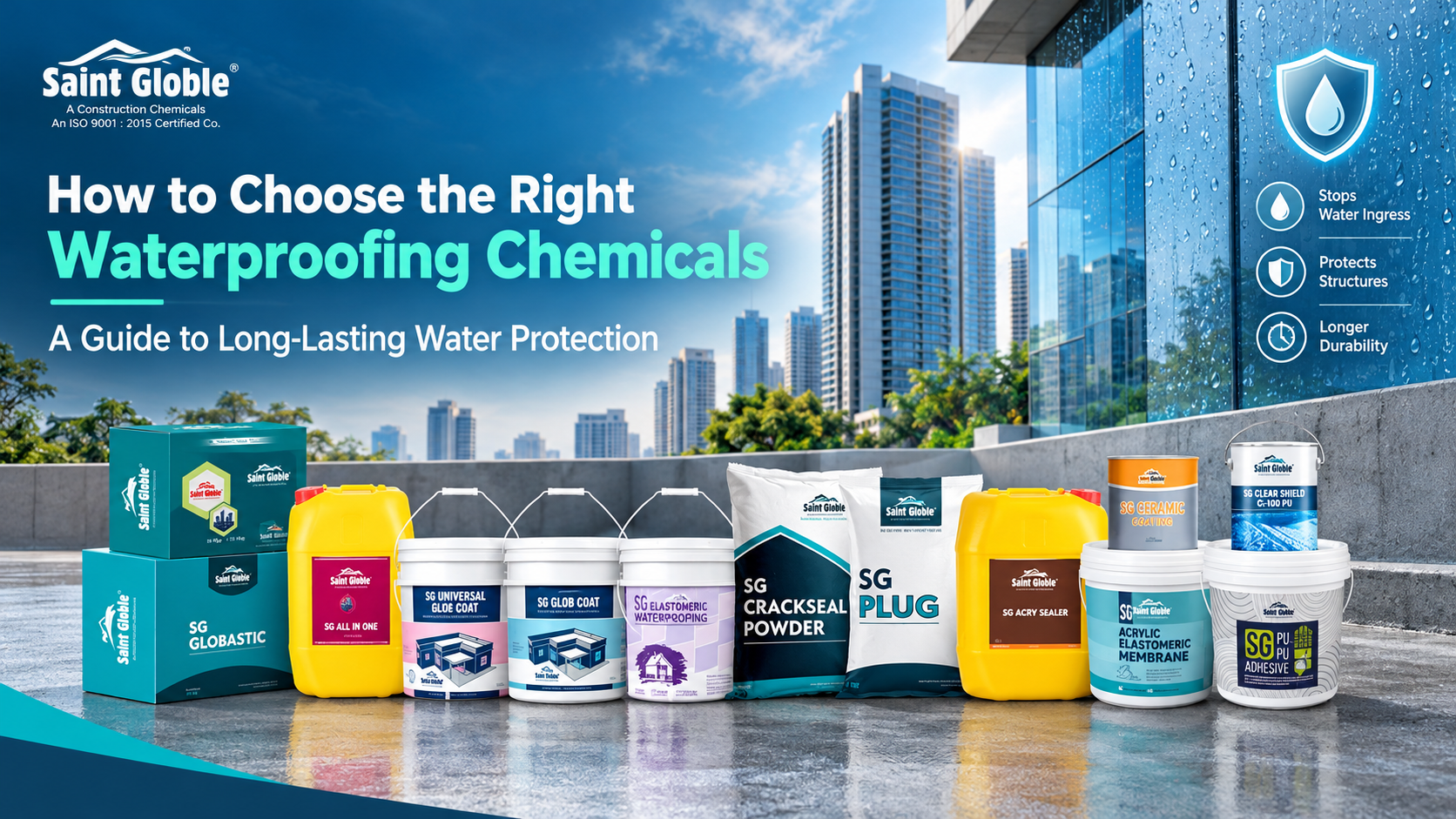
Water leakage, damp walls, peeling paint, and moisture damage are common problems in residential, commercial, and industrial buildings. If left untreated, these issues can affect the appearance of a property, damage interior finishes, and increase maintenance costs. Choosing the right waterproofing chemicals is an important step in protecting buildings from water penetration and improving their long-term durability.
Whether you are waterproofing a terrace, bathroom, exterior wall, balcony, or concrete surface, selecting the correct product depends on the surface condition, source of water leakage, exposure to moisture, and construction requirements.
Modern waterproofing solutions include liquid-applied coatings, polymer-based admixtures, bonding agents, primers, and cementitious waterproofing systems. Each product serves a specific purpose, so understanding the available options can help homeowners, builders, contractors, and construction professionals make informed decisions.
Saint Globle offers construction chemical solutions, including waterproofing products for different building applications. Its product range includes solutions such as SG Globastic, SG SBR, and other construction chemicals that can be explored according to project requirements.
In this guide, we will explain how to choose the right waterproofing chemicals, the factors to consider before purchasing, common waterproofing mistakes, and how Saint Globle's waterproofing solutions can help you plan your next construction project.
What Are Waterproofing Chemicals?
Waterproofing chemicals are specialised construction products used to reduce water penetration and protect building surfaces from moisture-related damage. Depending on their formulation, they may be applied as coatings, mixed into cement-based materials, or used as primers and bonding agents within a suitable waterproofing system.
These products are commonly used in new construction, renovation, concrete repair, and building maintenance.
Waterproofing chemicals may be used for:
- Roofs and terraces
- Bathrooms and shower areas
- Balconies and exterior walls
- Concrete surfaces and cementitious substrates
- Water-retaining structures, where the product is suitable
- Damp-prone construction areas
- Certain concrete repair and protective applications
The correct product depends on the type of surface, water exposure, movement or cracking, and the manufacturer's application recommendations.
Why Is Waterproofing Important for Buildings?
Waterproofing is an essential part of building protection. Rainwater, plumbing leaks, moisture migration, and water accumulation can contribute to damage if the affected areas are not properly treated.
Here are some important reasons to choose an appropriate waterproofing system.
1. Helps Prevent Water Leakage
A correctly selected and applied waterproofing system helps limit water penetration through suitable building surfaces. It can be particularly important for terraces, bathrooms, balconies, and other moisture-exposed areas.
2. Protects Walls and Ceilings
Water seepage may cause damp patches, paint blistering, peeling finishes, and staining. Appropriate waterproofing helps protect surfaces when the underlying cause of moisture has been correctly identified and treated.
3. Supports Concrete Durability
Water entering concrete can contribute to deterioration under certain conditions. Suitable protective systems can help reduce water ingress and protect concrete surfaces.
4. Reduces Maintenance Requirements
Addressing waterproofing problems correctly can help reduce repeated repairs and the costs associated with damaged finishes.
5. Helps Maintain Property Value
A well-maintained building with properly designed waterproofing systems is better positioned to avoid recurring moisture-related issues.
However, waterproofing chemicals are not interchangeable. The product must be suitable for the specific application, and structural cracks, plumbing leaks, drainage issues, or other underlying causes may require separate repairs.
Different Types of Waterproofing Chemicals
Before choosing a waterproofing product, it is helpful to understand the main categories and their uses.
1. Cementitious Waterproofing Chemicals
Cementitious waterproofing products are generally based on cement and selected additives, sometimes combined with polymers to improve their properties.
Depending on the formulation, they may be suitable for concrete and masonry surfaces, bathrooms, balconies, and other approved applications.
When selecting a cementitious waterproofing product, consider the substrate, moisture exposure, required flexibility, and whether tiles or other finishes will be installed over the treated surface.
2. Acrylic Waterproofing Coatings
Acrylic waterproofing coatings are commonly used for suitable exterior surfaces and exposed areas, depending on the formulation.
Certain products are designed to form flexible protective films that help resist water penetration and weather exposure.
Before purchasing an acrylic coating, check whether it is intended for the particular surface, exposure conditions, and expected movement.
3. SBR Waterproofing Admixtures
Styrene-butadiene rubber (SBR) latex products are commonly used as bonding agents and admixtures in cement-based mortars, screeds, concrete repair materials, and certain waterproofing applications.
When used according to the manufacturer's instructions, a suitable SBR product can help improve adhesion and modify the properties of cement-based mixes.
Saint Globle's SG SBR is described as a latex-based waterproofing and bonding admixture for applications including concrete repair, bonding of screeds and renders, and waterproofing-related work.
The correct mixing ratio and application method should always be taken from the current product documentation.
4. Waterproof Primers
A waterproofing primer or compatible surface primer may be used as part of a waterproofing system to prepare a substrate before subsequent treatment.
The purpose of a primer depends on its formulation. It may help improve adhesion or prepare an appropriate surface for a coating or other construction material.
Before using a primer, confirm its compatibility with the substrate and the waterproofing product that will be applied over it.
5. Flexible Waterproofing Coatings
Flexible waterproofing coatings are designed for applications where the product needs to form a continuous protective layer and accommodate movement within the limits of its specified performance.
These coatings may be suitable for certain terraces, balconies, bathrooms, and concrete surfaces.
For example, Saint Globle SG Globastic is described as a two-component, flexible polymer-modified cementitious waterproof coating for approved applications such as concrete surfaces, balconies, terraces, bathrooms, and swimming pools.
Always follow the product's instructions regarding surface preparation, application thickness, curing, and compatibility with subsequent finishes.
How to Choose the Right Waterproofing Chemicals
Choosing the right waterproofing chemicals requires an understanding of the surface, the source of moisture, and the conditions in which the product will be used.
Consider these important factors before purchasing.
1. Identify the Source of Water Leakage
The first step is to understand why water is entering the building.
Common causes include:
- Cracks in concrete or plaster
- Damaged terrace waterproofing
- Failed bathroom waterproofing
- Poor drainage or water accumulation
- Defective plumbing connections
- Gaps around joints and service penetrations
- Moisture rising through walls from the ground
The correct treatment depends on the cause. For example, a surface coating may not solve a leaking pipe, and a crack filler alone may not resolve a structural crack.
Identify the underlying issue before selecting the waterproofing product.
2. Consider the Surface Material
Different surfaces require different treatment methods. Concrete, cement plaster, masonry, and previously coated surfaces may have different preparation and compatibility requirements.
Check whether the waterproofing product is approved for the surface you intend to treat.
For weak, dusty, contaminated, or damaged substrates, appropriate cleaning and repairs may be necessary before waterproofing begins.
3. Understand the Application Area
The requirements for a terrace are different from those for a bathroom or an exterior wall.
- Terraces and roofs: Consider rainfall exposure, drainage, standing water, and temperature changes.
- Bathrooms and showers: Assess the need for a continuous waterproofing layer beneath the finished surface.
- Balconies: Consider water exposure, drainage, joints, and the compatibility of the waterproofing system with tile finishes.
- Exterior walls: Identify cracks, rainwater penetration, and the suitability of the proposed coating for exterior exposure.
- Concrete repair: Determine whether a bonding admixture, repair mortar, or separate waterproofing system is required.
Selecting a product according to the application helps avoid using a solution that is unsuitable for the problem.
4. Check Flexibility Requirements
Some surfaces may experience limited movement because of temperature changes, shrinkage, or other factors.
In these situations, the flexibility of the waterproofing system may be important.
Check the manufacturer's specifications for crack-bridging capability, movement tolerance, and approved applications. Do not assume every waterproofing product can accommodate structural movement.
5. Review Product Compatibility
A waterproofing system may involve several materials, such as a primer, repair mortar, waterproof coating, adhesive, and final finish.
These products should be compatible with one another.
For example, if tiles will be installed over a waterproofing layer, verify that the membrane and tile adhesive are compatible and that the waterproofing system is approved for the intended installation.
6. Compare Coverage and Application Requirements
The amount of material required depends on the product, substrate condition, application thickness, and number of coats.
Before purchasing, check:
- Recommended application thickness
- Number of coats
- Coverage per pack
- Mixing ratio, where applicable
- Recoating interval
- Curing time
- Requirements for protective or finishing layers
Calculate the approximate quantity using the manufacturer's stated coverage rather than relying on a generic estimate.
7. Choose a Reliable Construction Chemical Supplier
Product information and technical guidance can help you select a suitable waterproofing solution.
Saint Globle provides a range of construction chemical products and waterproofing solutions. Builders, contractors, and property owners can explore its product range and consult the company about the requirements of their project.
Explore Waterproofing Products from Saint Globle
Saint Globle offers construction chemical products for different waterproofing and surface protection requirements. Four products worth exploring for your waterproofing-related project are SG Water Based APC, Waterproof SBR, SG Primer Waterproof, and Waterproof Globastic.
The appropriate choice depends on each product's intended use and technical specifications.
1. SG Water Based APC
SG Water Based APC is one of the target products to explore within Saint Globle construction chemical range.
Before selecting this product, review its official product information to establish its intended application, compatibility with cement-based materials, and recommended mixing or application method.
If your project involves bonding, surface preparation, or a cement-based construction application, confirm the specific suitability of the product with Saint Globle's technical team.
2. Waterproof SBR
SBR-based products are commonly used as bonding agents and admixtures in suitable cementitious construction applications.
Saint Globle SG SBR is described as a modified styrene-butadiene copolymer emulsion used for waterproofing and bonding applications.
Depending on the specified formulation and application, SBR products may be used in concrete repair, bonding of screeds and renders, and the preparation of certain waterproof cement-based mixes.
Before purchasing Waterproof SBR, confirm the correct product name, intended use, mixing proportions, and recommended application method with the manufacturer.
3. SG Primer Waterproof
Primers may form an important part of a waterproofing system when the selected product requires a suitable preparatory treatment.
When exploring Saint Globle's waterproofing product range, check the current information for SG Primer Waterproof and confirm the surfaces on which it is recommended.
Before application, establish whether the primer is compatible with the substrate and the waterproofing coating that will follow. Surface preparation and drying requirements should be followed as specified by the manufacturer.
4. Waterproof Globastic
SG Globastic is a two-component, flexible polymer-modified cementitious waterproof coating.
According to Saint Globle's product information, it is intended for waterproofing and protecting concrete surfaces, balconies, terraces, bathrooms, swimming pools, and other approved applications.
The product is designed to form a flexible protective layer and adhere to suitable construction surfaces.
When considering SG Globastic, review the required surface preparation, mixing instructions, application thickness, coverage, curing requirements, and compatibility with any tiles or finishes that will be installed over it.
For the best results, select the product according to the exact requirements of your project rather than assuming a single waterproofing material is suitable for every surface.
Explore Saint Globle's Complete Waterproofing Range
To compare available products, visit the official Saint Globle Waterproofing Solutions page.
Review the available product information and consult the company if you need help determining which waterproofing system is appropriate for your building.
Step-by-Step Guide to Applying Waterproofing Chemicals
Correct application is essential for the performance of a waterproofing system. Always follow the selected product's technical data sheet.
Step 1: Inspect the Surface
Identify visible cracks, damp patches, damaged coatings, loose plaster, and other defects. Investigate the source of water penetration before starting the work.
Step 2: Prepare the Substrate
Remove loose material, dust, oil, and contaminants. Repair defective areas using compatible materials and allow the repairs to reach the required condition before applying the waterproofing product.
Step 3: Apply the Recommended Primer
If the selected system requires a primer, apply the compatible product according to the manufacturer's instructions.
Follow the specified application rate and drying time before proceeding to the next stage.
Step 4: Prepare the Waterproofing Material
For two-component products, combine the components in the specified proportions using the recommended mixing procedure.
For admixtures such as SBR, use the manufacturer's prescribed mixing ratio. Do not change the formulation or add unapproved materials.
Step 5: Apply the Waterproofing System
Apply the product using the recommended tool and method. Maintain the specified thickness and coverage.
Pay particular attention to corners, joints, drains, pipe penetrations, and other locations where water may enter.
Step 6: Allow Proper Curing
Allow the waterproofing material to cure for the specified period. Protect the treated surface from rain, standing water, premature loading, or other conditions identified in the product instructions.
Step 7: Inspect Before Applying the Final Finish
Check that the waterproofing system has been applied continuously and that the required curing period has been completed.
Where required, conduct the specified waterproofing test before installing tiles, screeds, or other finishes.
Common Waterproofing Mistakes to Avoid
Even a suitable waterproofing product may not perform as expected if the system is incorrectly selected or applied.
Avoid these common mistakes:
Ignoring the source of leakage: Determine whether the problem comes from cracks, plumbing, drainage, or failed waterproofing.
Skipping surface preparation: Dust, loose plaster, and contaminated surfaces can affect adhesion.
Using an incompatible primer: Confirm compatibility between the primer, substrate, and waterproofing coating.
Incorrect mixing: Follow the product's specified mixing ratios and preparation instructions.
Applying insufficient material: Maintain the required coverage and thickness.
Ignoring joints and corners: These areas may need additional detailing or compatible joint treatment.
Rushing the curing process: Allow the waterproofing material to cure according to the product instructions.
Applying tiles too early: Confirm that the waterproofing layer is ready to receive the next material.
Choosing products by price alone: Consider technical suitability, application requirements, and the complete waterproofing system.
How Much Do Waterproofing Chemicals Cost in India?
The price of waterproofing chemicals in India varies according to the product formulation, packaging size, intended application, coverage, and manufacturer.
A primer, an SBR admixture, and a two-component cementitious waterproofing coating serve different purposes, so their prices should not be compared without considering their applications.
Before purchasing, compare the following factors:
- Product type and intended use
- Coverage per pack
- Required number of coats
- Application thickness
- Surface preparation requirements
- Labour and application costs
- Compatibility with the final finish
- Long-term maintenance requirements
For current prices, product availability, and project-specific recommendations, contact Saint Globle directly.
Why Consider Saint Globle for Waterproofing Solutions?
Choosing a construction chemical supplier with a suitable product range can help simplify product selection for building projects.
Saint Globle specialises in construction chemical solutions, including waterproofing products, adhesives, bonding materials, and concrete repair products.
When exploring Saint Globle's waterproofing range, consider the following steps:
- Identify the area affected by water penetration.
- Determine the source of leakage or moisture.
- Assess the surface material and its condition.
- Review the technical specifications of suitable products.
- Confirm compatibility between primers, coatings, and finishing materials.
- Request current pricing and application guidance.
Visit Saint Globle to explore its construction chemical products and enquire about a suitable waterproofing solution.
Frequently Asked Questions About Waterproofing Chemicals
1. Which Waterproofing Chemicals Are Best for Buildings?
The right waterproofing chemical depends on the application, surface material, water exposure, and source of leakage. Cementitious coatings, acrylic membranes, SBR admixtures, and primers each serve different purposes.
2. What Is Waterproof SBR Used For?
SBR-based products are commonly used as bonding agents and admixtures in cement-based mortars, screeds, concrete repair materials, and certain waterproofing applications. Follow the selected product's technical instructions.
3. What Is SG Globastic Used For?
Saint Globle describes SG Globastic as a two-component, flexible polymer-modified cementitious waterproof coating for applications including concrete surfaces, balconies, terraces, bathrooms, and swimming pools, subject to the product's specifications.
4. Why Is a Waterproofing Primer Used?
A suitable primer can prepare a surface or improve compatibility with the subsequent coating system. Whether a primer is required depends on the selected waterproofing product and substrate.
5. Can Waterproofing Chemicals Be Applied to Terraces?
Yes, certain waterproofing systems are designed for terrace applications. The product must be suitable for the surface, exposure conditions, drainage requirements, and intended finishing system.
6. How Can I Prevent Bathroom Water Leakage?
Identify the source of leakage, repair defective plumbing or damaged surfaces, and install a compatible waterproofing system in the required areas. Follow the specified curing and testing procedures before installing the final finish.
7. What Factors Affect Waterproofing Chemical Prices?
Prices depend on formulation, packaging, coverage, number of coats, application thickness, and the project requirements. Compare the total cost of the system rather than only the price per container.
8. Can SBR Be Mixed With Cement?
Some SBR products, including Saint Globle's SG SBR, are designed for use with cement-based materials. Use only the specified mixing proportions and application methods provided by the manufacturer.
9. How Long Does Waterproofing Take to Cure?
Curing time varies by formulation, application thickness, temperature, humidity, and substrate condition. Refer to the selected product's technical data sheet before exposing the treated area to water or applying another finish.
10. Where Can I Find Saint Globle Waterproofing Products?
Visit the Saint Globle Waterproofing Solutions page to explore the available range and access relevant product information.
Conclusion
Choosing the right waterproofing chemicals is essential for protecting buildings against water penetration, dampness, and moisture-related deterioration. The best solution depends on the source of leakage, the surface material, the application environment, and the technical requirements of the waterproofing system.
From SBR-based bonding admixtures and compatible primers to flexible cementitious coatings, each product has a specific role in construction and waterproofing work. Correct surface preparation, proper application, sufficient curing, and compatible finishing materials are equally important for long-term performance.
Saint Globle offers construction chemical products that customers can explore for different waterproofing and building protection requirements. By assessing your project carefully and consulting the manufacturer's product documentation, you can make a more informed decision.
Looking for the right waterproofing solution for your building? Visit Saint Globle or contact the team to enquire about product specifications, pricing, and application guidance.